








Reinventing the Classic with a Functional Twist –
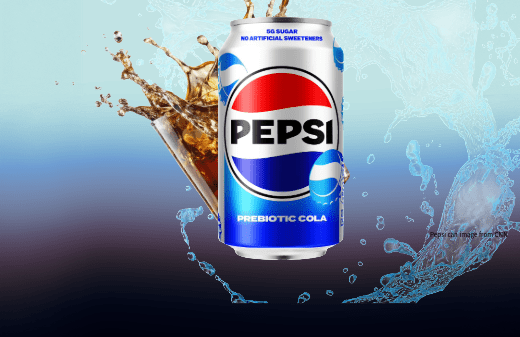
In July 2025, PepsiCo introduced Pepsi Prebiotic Cola – its first major innovation in the cola category in two decades. A 12-ounce can delivers 5 g cane sugar, 30 calories, no artificial sweeteners, and 3 g prebiotic fiber. Available in Original and Cherry Vanilla, this product premieres via e-commerce in fall 2025 and expands to retail in early 2026.
Simultaneously, PepsiCo completed the acquisition of Poppi, a prebiotic soda brand founded in 2018. Poppi’s rise aligned with wellness trends, while Prebiotic Cola targets traditional cola drinkers who demand healthier alternatives.
Dual-Brand Strategy: Poppi vs. Pepsi Prebiotic Cola
An informed contrast:
- Pepsi Prebiotic Cola maintains the classic cola taste, leverages corn fiber, and avoids vinegar – earning favorable comparisons to Diet Pepsi, with Cherry Vanilla mitigating any stevia aftertaste.
- Poppi uses apple cider vinegar, cassava root fiber, and agave inulin, resulting in a tangy, modern flavor profile that resonates with wellness-oriented consumers.
This dual-brand approach enables PepsiCo to span both mainstream and niche markets.
Supply and Tariff Strategy: Anchoring Resilience
Strategic sourcing and supplier relationships play pivotal roles:
- U.S. Cane Sugar: By anchoring on domestic sugar – from producers in Florida and Louisiana – PepsiCo avoids import tariffs and quota volatility, trading off lower price for procurement stability.
- Sugar Market Volatility: Global sugar is destabilized by Brazil’s ethanol pivot and climate disruptions. Long-term U.S. contracts provide predictability.
- Packaging Costs: Rising tariffs on aluminum and steel, along with elevated shipping costs, compel PepsiCo to negotiate scale contracts with packaging suppliers to protect margins.
India’s GST Overhaul: A Fresh Barrier
India’s GST Council, in September 2025, consolidated tax slabs to 5%, 18%, and introduced a 40% “sin tax” specifically for carbonated, caffeinated, and sugar-based drinks. Pepsi Prebiotic Cola, despite its functional branding, falls into the highest bracket.
- Pricing Impact: Elevated shelf prices restrict consumption to affluent urban areas.
- Distribution Strategy: PepsiCo must rely on format innovation (smaller packs), channel segmentation, and premium positioning in modern retail. Operational reach through Varun Beverages remains crucial for balanced access.
Go-to-Market Channels & Distribution Execution
PepsiCo employs a phased rollout:
- E-commerce Launch (U.S.): Enables scaled testing, consumer insights, and brand building before mass retail.
- Retail Launch (2026): Seamlessly slots Prebiotic Cola into the traditional cola aisle alongside legacy offerings.
- Emerging Market Strategy (India & beyond): Despite high GST headwinds, metro-focused outreach through both kirana networks and modern trade supports strategic placement amongst urban health-conscious consumers.
Strategic Overview: An Enterprise Hedge
Pepsi Prebiotic Cola embodies a multi-faceted strategy:
- Health-forward evolution – modernizing cola heritage without alienating traditional consumers.
- Supply chain resilience – anchored with domestic U.S. sourcing while exploring global diversification.
- Tax adversity in India – navigating a 40% GST with packaging, pricing, and format innovation.
- Dual-brand architecture – Poppi in wellness aisles; Prebiotic Cola in mainstream channels.
- Scalable execution – balancing e-commerce feedback loops with traditional distribution muscle internationally.
Strategic Mastery: Rohan Oza’s Role
Central to this strategy is Rohan Oza, the dealmaker behind Poppi’s transformation and eventual sale to PepsiCo:
- Oza invested $400,000 for a 25% stake in what was then Mother Beverage on Shark Tank and rebranded it to Poppi, shifting from apple cider vinegar to sparkling prebiotic soda.
- As chairman and largest individual shareholder (~21%), he steered Poppi’s ascent to over $100 million in revenue by 2023, culminating in PepsiCo’s $1.95 billion acquisition in May 2025, at roughly a 3.3× revenue multiple.
- Oza had previously led major beverage exits, Vitaminwater, Smartwater, and Bai-through strategic branding and celebrity partnerships. The Poppi deal marks his largest exit to date.
His leadership exemplifies how entrepreneurial vision, branding flair, and market timing can align with a global player’s strategic expansion.
Conclusion
Pepsi Prebiotic Cola is more than a beverage, t’s a strategic convergence of consumer health dynamics, tax and trade complexity, supply chain engineering, and visionary entrepreneurial leadership. Its success hinges on navigating U.S. tariff protection, India’s sinusoidal GST landscape, and market segmentation, all while drawing from Poppi’s ascendant momentum, orchestrated by Rohan Oza’s seasoned execution.
PepsiCo’s venture represents a global consumer-brand’s evolution in an increasingly complex, health-conscious, and regulated world.